Curent Exhibit
May 3, 2008 through December 2008
The Community of True Inspiration: Pacifism and Patriotism
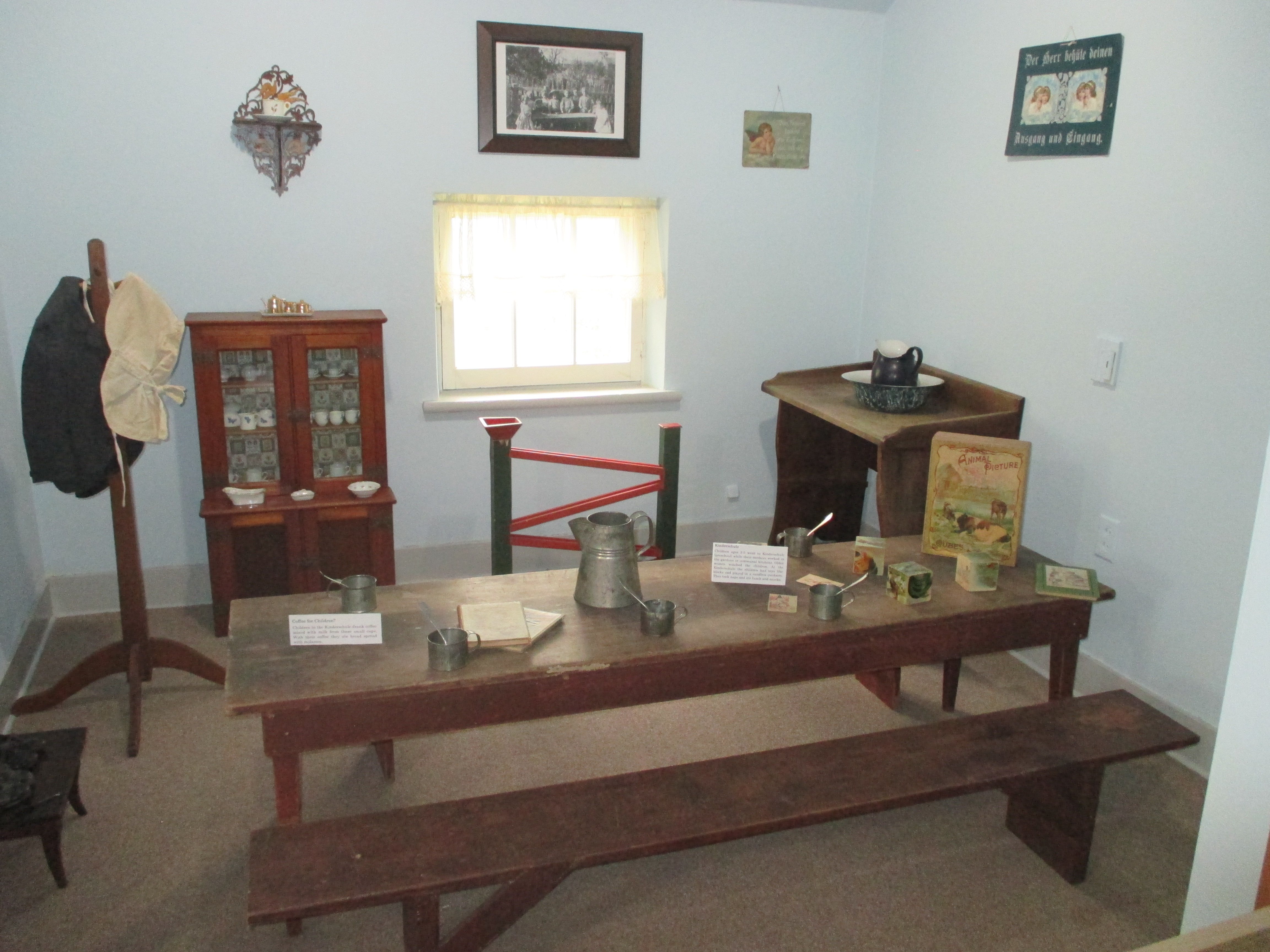
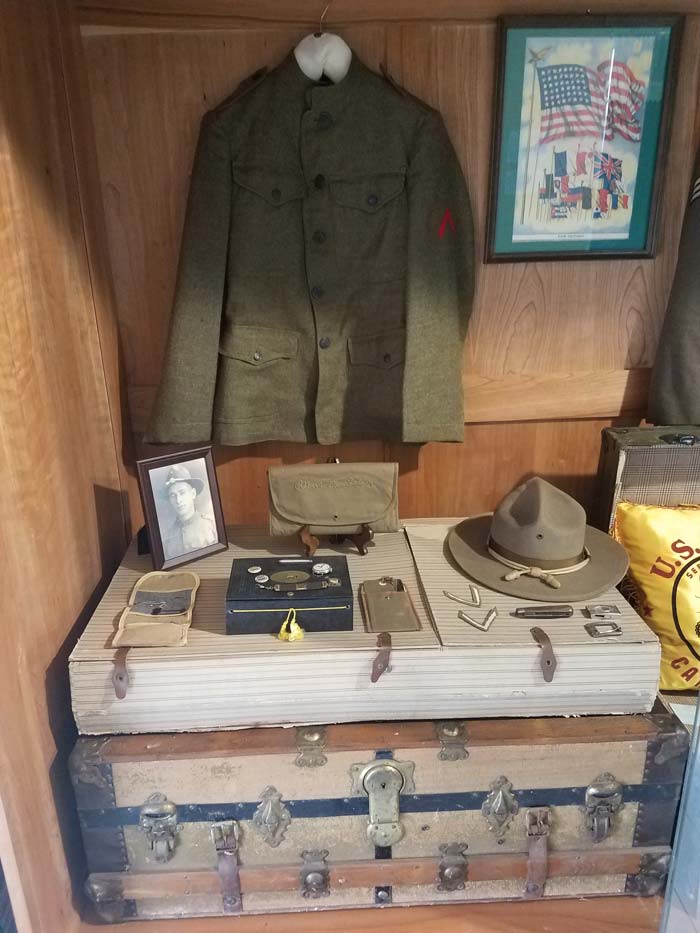
The Community of True Inspiration walked a tenuous line as both pacifists and loyal citizens. This exhibit focuses on the Inspirationist experience primary during the Civil War, World War I, and World War II and documents the continuity and change of their beliefs both during the communal era and after.

Additional Exhibits
“The
Amana
Meteorite
of
1875”
During
the
night
of
February
12,
1875
the
Amana
Meteorite
or “Detonating Meteorite” lit
up
the
night
sky
as
far
away
as
Chicago
and
St.
Louis.
Pieces
of
the
meteorite
are
in
museums
around
the
world,
including
London
and
Paris.
Our
exhibit
features
an
actual
piece
of
the
meteorite
as
well
as
maps,
charts
and
contemporary
documentation.
“19th
Century
American
Communes”
In
the
same
year
the
Amana
meteorite
fell,
Charles
Nordhoff
published
a
book
on
The
Communistic
Societies
of
the
United
States,
which
included
detailed
accounts
of
the
Shakers,
Zoar,
Oneida,
Amana
and
many
other
19th
century
groups.
Last
year
the
museum
at
Hancock
Shaker
village
in
Massachusetts
mounted
an
exhibit
based
on
Nordhoff’s
book
and
we
are
fortunate
to
have
the
exhibit
panels
on
loan.
They
are
displayed
at
the
Homestead
Store
Museum.

Amana Heritage Museum Collections
The Amana Heritage Museum collections are comprised of approximately 12,000 objects and 10,000 archival pieces. The collections are housed in three historic, communal-era buildings. The collection policy of the museum limits collection to items that pertain to the history of Amana and its associated religious group (The Community of True Inspiration) in Germany and America. The period of the collections covers ca. 1700 to the present, with emphasis on the communal period of Amana history (1855-1932). Many of the items are unique. The collection is an important resource for studies of American communal societies and German/American religion and culture.
The collections of the Amana Heritage Museum have been formed primarily through donations from the community. The museum was established in 1969 in response to a growing community sentiment that Amana's heritage should be preserved for the community and its descendants and its story told to the increasing numbers of tourist visitors. At its inception, the types of exhibits required were determined and the public solicited for the necessary objects. The museum has since become the collection point for all types of artifacts and documents that relate to Amana. It continues to receive donations of objects from the community and often solicits specific items to address recognized weaknesses in the collections.
The museum's collections are the largest and best organized source for the history of the Amana community both in America and Germany. The artifact collection represents the material culture of communal and post-communal Amana, and the archives contain the essential and fundamental documents that trace the community's development. The museum collections are significant for those scholars and researchers interested in American communal societies, German immigration, United States religious history, and German radical pietism. The collections are also an important source for many specialized researchers who are interested in--for example--furniture, clothing, quilts, calico, woolens and baskets.

Artifacts
The strengths of the museum collections include artifacts from the 19th and early 20th centuries that were manufactured by the communal Amana Society. Approximately 75% of the collection items were produced or manufactured in the Amana community. These include textiles such as woolens and calico, clothing of all sorts made in the community (1500 pieces); furniture and furnishings (2400 pieces); and manufacturing and agricultural products and equipment. We possess representative pieces of communal Amana crafts that include tinsmithing, blacksmithing, woodwork, basket weaving, carpet weaving, and needlework. Another strength of the collection is children's toys made during the communal era, including doll houses and doll house furnishings. The museum has a fine collection of original lithographs and a limited number of drawings and paintings by Amana artists.

Library & Archives
The library and archives contain works printed by the community and related volumes from the 18th century to the present. Manuscripts include thousands of letters by community members and by leader Christian Metz (1794-1867), which we have catalogued and indexed. Passports, citizenship papers, account books, maps and diaries are also part of the collection. Most of these manuscripts are written in the German language in the old German script. As community historian, the museum also documents the present by collecting papers and materials from local organizations, boards and clubs.
Approximately 5000 photographs dating from 1880 to the present are included in the collection. We recently added over 3000 slides of present day Amana to the collection. The library contains extensive genealogical records. Oral histories of over 150 residents who lived during the communal era are recorded on cassette, transcribed, and indexed. The museum actively collects articles and research work on Amana and its history.

Policy for use of the Library & Archives
- Use of the Amana Heritage Society Library and Archives shall be only for purposes consonant with the goals and interests of the Amana Heritage Society.
- Library and Archives use is by appointment only.
- No Library and Archives materials shall be allowed to be removed from the premises.
- Museum staff must be present with persons using the Library and Archives. Only museum staff may remove and replace materials from their storage places.
- Photocopies of books and documents may be made if the condition of the material allows and only with the consent of museum staff. A charge of $.20 per page will be assessed.
- A user's fee shall be assessed according to the following schedule: $15 per hour up to a maximum of $30 per day up to a maximum of $100 per week.
- Museum staff may provide reference services in response to phone, mail or email requests. A fee of $15 per hour will be charged for staff research services.
- Use and duplication of photographs in the collection is subject to the following:
- Photographs must be handled according to staff instruction.
- If the condition of the photograph allows, photocopies of the image may be made at a charge of $.50 per photograph.
- Duplicates of photographs may be provided according to the current price schedule. See Photograph Duplication Order form.
- The user must obtain proper permission to publish a photograph and agree to the conditions on the Permission to Publish Photographs form. Obtaining release for any copyrighted materials is entirely the responsibility of the user.

|